
Asia’s digitalization push is increasingly focused on growth, inclusion, regional trade and investment, and financial resilience amid a fragmenting global economy. Across the region, digitalization is already strengthening intraregional trade, supply-chain management, and new forms of financial access. Digital platforms, e-customs, digital certificates, and logistics technologies are making it easier for firms to participate in […]
Category Archives: Financial Stability
Financial Stability
Climate Risk Is Financial Risk: Why Asia’s Central Banks Cannot Wait and How They Should Respond
15
Sep
Sep
Climate risks are intensifying while transition progress remains too slow. Against the backdrop, central banks face the practical challenge of containing the financial stability risks of delayed transition while enabling markets to fund credible pathways forward. Climate change can weaken banks, disrupt markets, raise sovereign risk, and undermine macroeconomic performance. For Asia-Pacific, the exposure is […]
03
Sep
Sep
1. AI opens a new path to true financial inclusion beyond access in developing Asia Developing Asia has made major progress in financial inclusion since 2011, but effective use of financial services continues to lag behind access. Global Findex (2025) data show that account ownership rose from around 45% of adults in 2011 to about […]

20
Feb
Feb
Stablecoins have become one of the most debated topics in contemporary financial policymaking, especially following the enactment of the GENIUS Act in the United States. Beyond the U.S.—and outside monetary jurisdictions whose exchange rate regimes and monetary policies are closely aligned with the U.S. dollar—policy responses have diverged significantly, ranging from outright bans, as in […]
Financial Stability, Macroeconomics and Monetary Policy
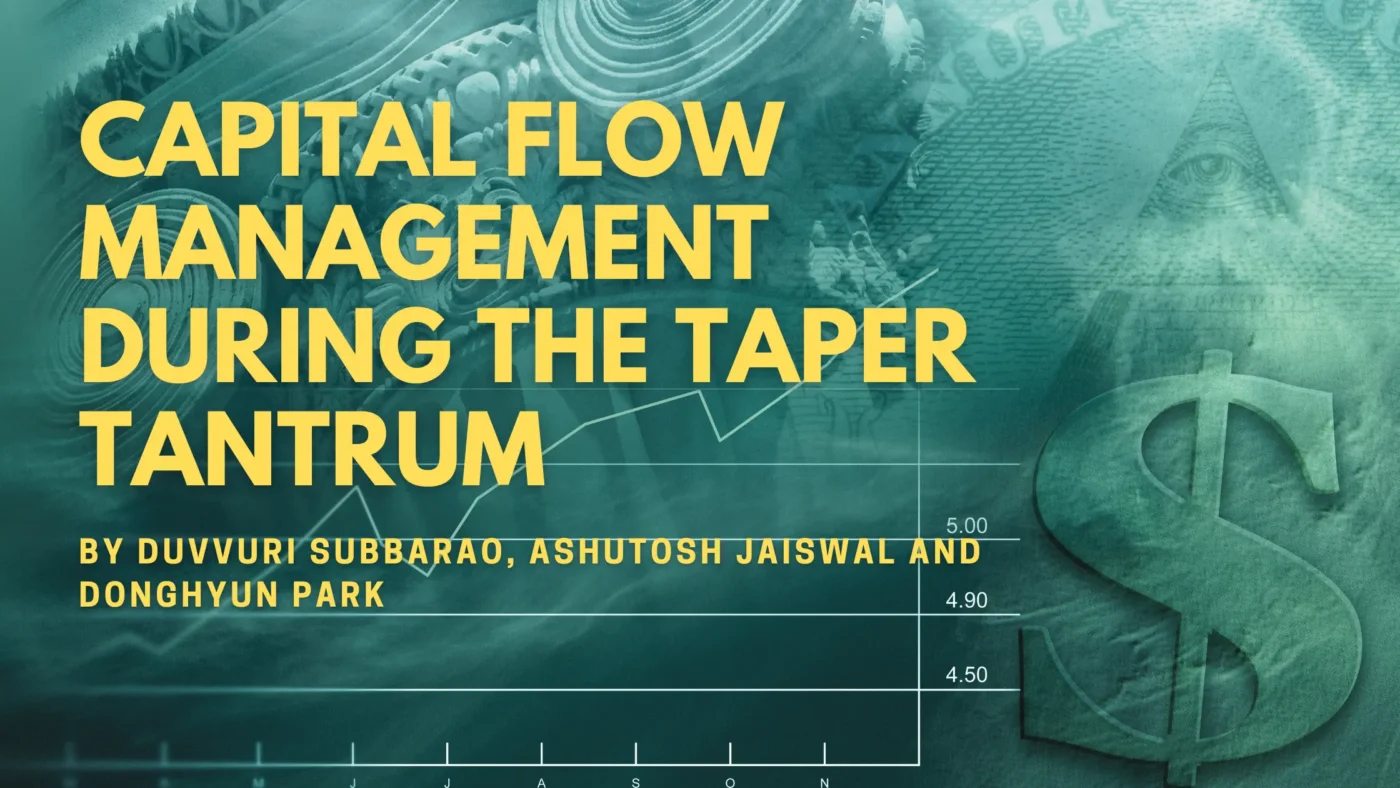
Capital Flow Management during the Taper Tantrum
20
Feb
Feb
Emerging market economies often face acute challenges in the wake of sudden bouts of market volatility triggered by sharp capital outflows. Managing such turbulence—particularly when macroeconomic fundamentals offer limited support—requires a calibrated mix of conventional and unconventional policy responses. There is rarely a textbook solution to crises of this nature; central banks must deploy all available instruments with agility, while maintaining credible and consistent communication to anchor expectations.
Financial Stability, Payment Systems, Supervision
Role of Cloud Services, AI and Technology in Shaping the Macro Architecture of the Financial System
12
Dec
Dec
Background The financial system has undergone a significant transformation in recent years, driven by rapid advancements in cloud computing, artificial intelligence (AI), and other emerging technologies for payments. These have had a profound impact on how banks do business, people interact with banks, and customers make payments for goods and services. Advancements in digital technology […]
03
Dec
Dec
1. Introduction The digitalization, the rise of crypto-assets and the advancement of technologies, such as distributed ledger technologies, have fuelled an unprecedented wave of innovations in payments and spurred many Central Bank Digital Currencies (CBDCs) projects over the past decade[1]. Central banks worldwide have been actively exploring solutions to preserve financial stability and safeguard monetary […]
Financial Stability
The Adoption of AI in SEACEN Member Central Banks and Considerations for Financial Stability
21
Nov
Nov
The purpose of this blog is to explore the adoption of AI in SEACEN’s member central banks (MCBs) and explore the risks to financial stability, and how central banks and regulators should respond.

Financial Stability, Payment Systems
From Unified Payment Interface to Unified Lending Interface: India’s Digital Journey Towards Financial Inclusion

13
Aug
Aug
The financial inclusion journey involves many legs: empowering citizens with a digital identity to open bank accounts; building a digital public infrastructure to facilitate low-cost interoperable payment services; and creating a technology platform to facilitate efficient delivery of frictionless credit. This blog takes readers through this journey in India.