

Asia’s digitalization push is increasingly focused on growth, inclusion, regional trade and investment, and financial resilience amid a fragmenting global economy. Across the region, digitalization is already strengthening intraregional trade, supply-chain management, and new forms of financial access. Digital platforms, e-customs, digital certificates, and logistics technologies are making it easier for firms to participate in […]
Tag Archives: central banking
Financial Stability
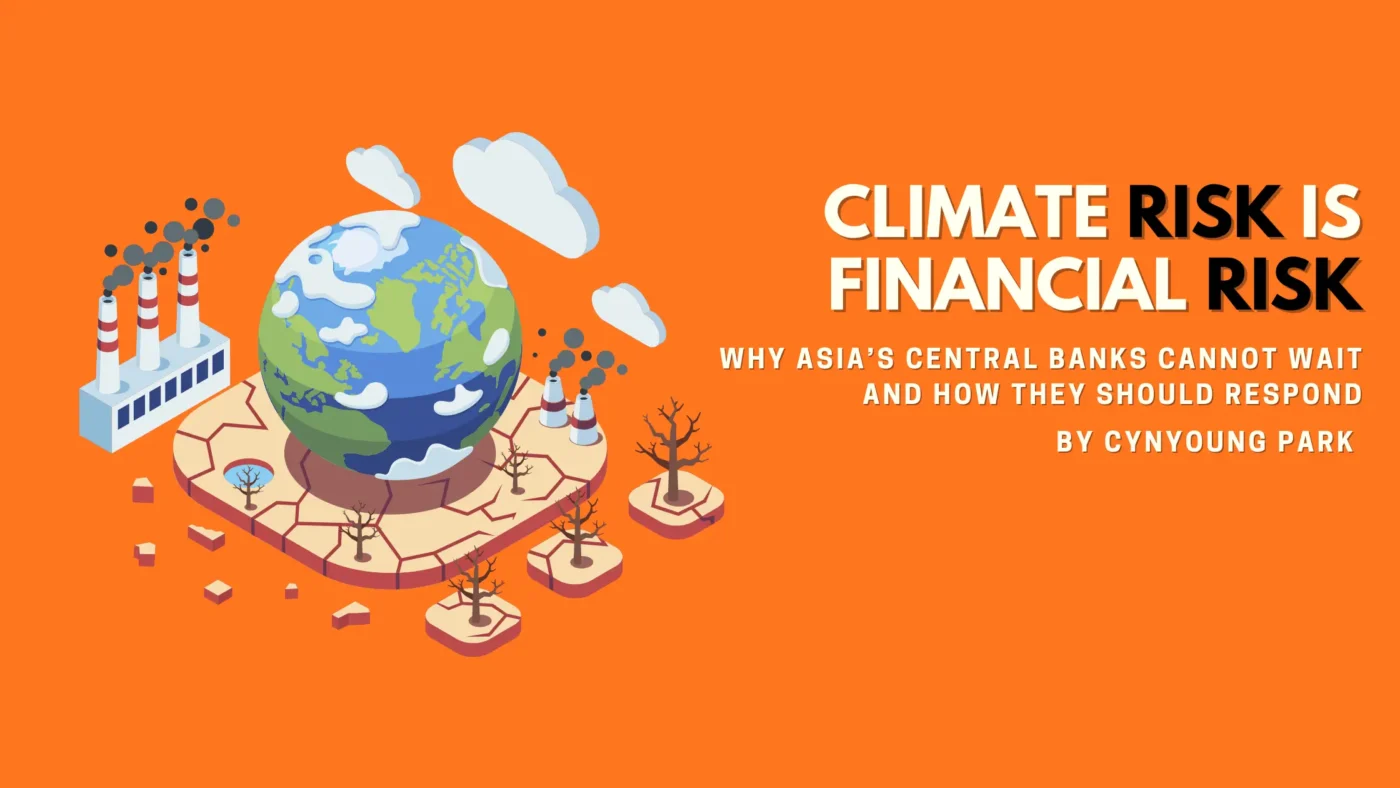
Climate Risk Is Financial Risk: Why Asia’s Central Banks Cannot Wait and How They Should Respond
15
Sep
Sep
Climate risks are intensifying while transition progress remains too slow. Against the backdrop, central banks face the practical challenge of containing the financial stability risks of delayed transition while enabling markets to fund credible pathways forward. Climate change can weaken banks, disrupt markets, raise sovereign risk, and undermine macroeconomic performance. For Asia-Pacific, the exposure is […]
03
Sep
Sep
1. AI opens a new path to true financial inclusion beyond access in developing Asia Developing Asia has made major progress in financial inclusion since 2011, but effective use of financial services continues to lag behind access. Global Findex (2025) data show that account ownership rose from around 45% of adults in 2011 to about […]
AI, Macroeconomics and Monetary Policy
AI Adoption, Regional Productivity, and Inflation: Evidence from Korea and Implications for Monetary Policy
28
Aug
Aug
The relationship between artificial intelligence (AI), productivity, and inflation is complex and multifaceted. AI adoption is expected to significantly raise productivity, therefore increasing aggregate output in the long run. However, AI-related spending could increase consumption and investment even before productivity gains materialized. Inflation responses to AI adoption also depends on the expectations of households and […]
Macroeconomics and Monetary Policy
Economics of Artificial Intelligence and the Future of Monetary Policy
06
May
May
This blog is based on a presentation made by Ceyhun Elgin at the SEACEN online course “Practical use of AI in monetary policy” on 28-30 April 2026. The Falling Cost of Cognition: Why Central Banks Must Rethink the AI Shock Artificial Intelligence (AI) is often discussed as a futuristic marvel or a tool for specialised […]
Human Capital, Leadership
Central Banks as Architects of Resilience: Why Governance, Independence, and Law Matter More Than Ever
05
May
May
The world of central banking is being reshaped at an unprecedented pace. Technological disruption, climate-related risks, and shifting geoeconomic dynamics are not only redefining the operating environment, but also fundamentally altering what is expected of central banks. In this context, central banks are increasingly called upon to act as “architects of resilience,” navigating a multitude […]
Macroeconomics and Monetary Policy
Global population is aging but a silver dividend may be the silver lining

21
Apr
Apr
This blog is based on Pension Research Council Working Paper 2025-05 “Global Aging and Growth: Is There A Silver Dividend?” In the long run, the demographic transition toward aging populations is an inevitable global phenomenon. According to UN definition, 7% to 14% of the population is 65 years old or older in aging societies. Even […]
Macroeconomics and Monetary Policy
Regional Monetary and Financial Cooperation in Asia: Progress So Far and the Way Forward
05
Mar
Mar
Introduction Since the Asian financial crisis of 1997-98, emerging and developing economies (EMDEs) in Asia have strengthened their resilience to external financial shocks by upgrading macroeconomic management frameworks, reforming financial sectors, accumulating FX reserves, making exchange rates more flexible, avoiding excessive short-term dollar inflows, and introducing a regional financial safety net and surveillance process. As […]
26
Feb
Feb
This blog is based on a presentation made by Hanno Lustig at the SEACEN Policy Summit on 5-6 February 2026. For much of the postwar era, the supremacy of the U.S. dollar has been treated as a permanent feature of the international monetary system. However, recent shifts in global finance suggest that we are entering […]
Macroeconomics and Monetary Policy
Rethinking the Dollar: The International Monetary System at a Crossroads
26
Feb
Feb
This blog is based on a presentation made by Jeffrey Frankel at the SEACEN Policy Summit 2026: The Future of the International Monetary System and the Role of Asia (5– 6February 2026). The Dollar’s Legacy and Its “Exorbitant Privilege” The U.S. dollar supplanted the British pound as the dominant international currency in the 20th century. […]