
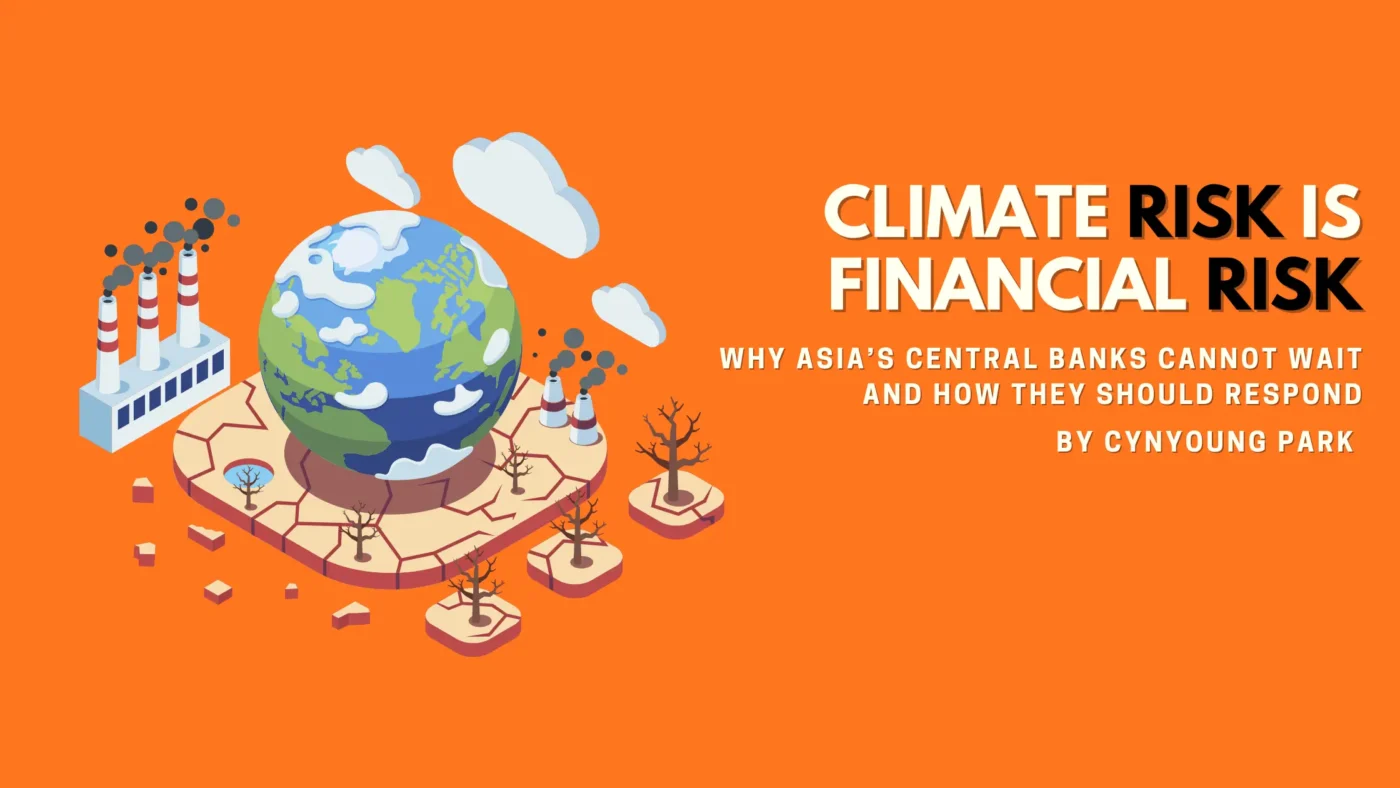
Climate risks are intensifying while transition progress remains too slow. Against the backdrop, central banks face the practical challenge of containing the financial stability risks of delayed transition while enabling markets to fund credible pathways forward.
Climate change can weaken banks, disrupt markets, raise sovereign risk, and undermine macroeconomic performance. For Asia-Pacific, the exposure is acute, as it is disproportionately more exposed to rising temperatures, extreme weather, coastal flooding, and disaster losses.
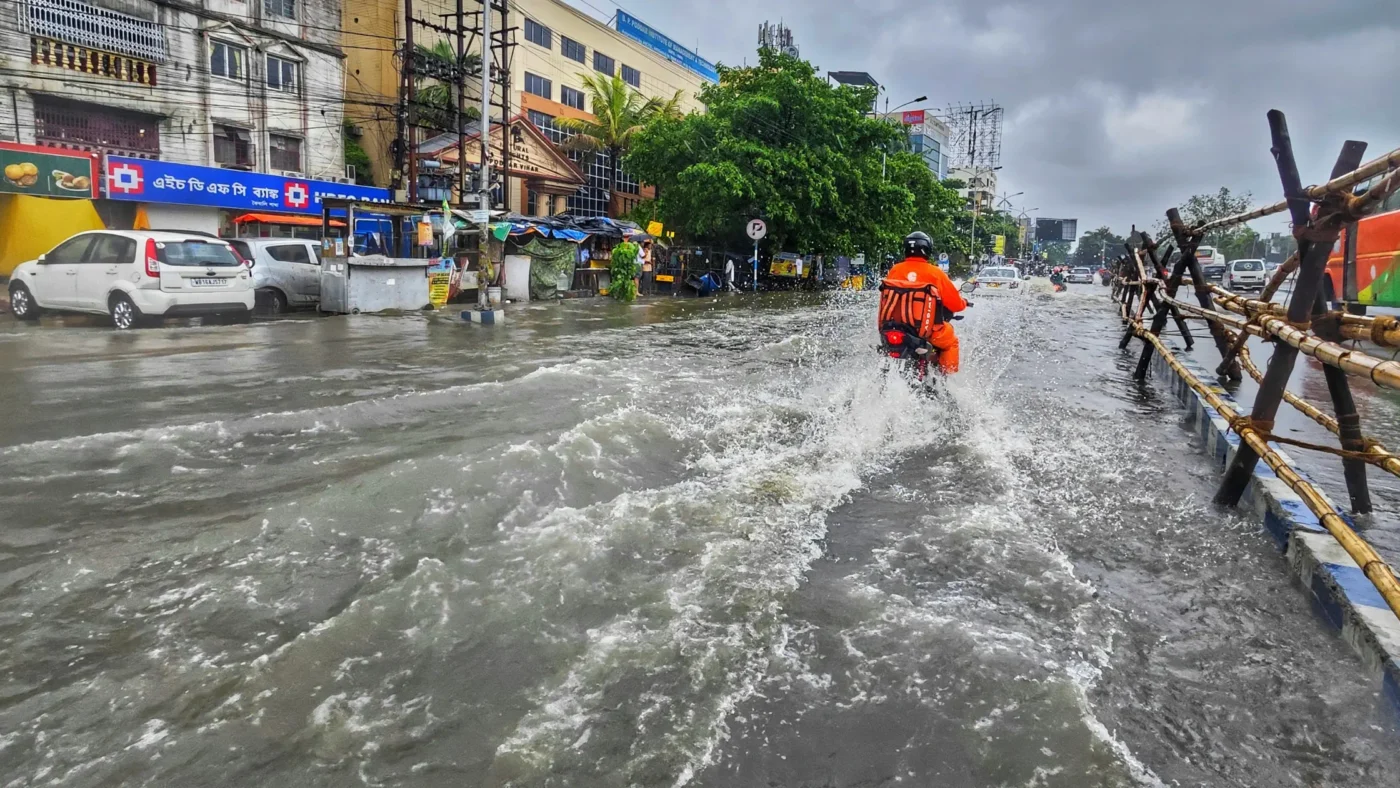
The risk to financial stability is real. The supervisory responsibility is to identify, measure, monitor, and manage these risks before they crystallise into systemic shocks.
Climate risk enters the financial system through physical risk from climate events and long-term environmental change, transition risk from policy, technology, and market shifts, and liability risk from legal claims linked to climate-related harm or mismanagement.
These channels map onto familiar risks—credit, market, liquidity, operational, reputational, and systemic—but they are broader, more uncertain, and more interconnected than traditional supervisory frameworks were designed to handle.
The policy debate is whether central banks should limit themselves to “market-fixing” risk management or also play a “market-shaping” role in supporting the transition. The European Central Bank has taken a more active view, arguing that climate change affects price stability and economic performance. The United States Federal Reserve has generally emphasised that elected governments set climate policy, while recognising climate risk as relevant to supervision.
In Asia-Pacific, central banks have tried to take the practical middle ground. They supervise climate-related risks robustly and, where mandates allow, help build the market infrastructure needed for sustainable finance to scale.
The response is already evolving. Central banks and financial supervisors are integrating climate risks into financial stability risk management through monitoring, supervision, stress testing, portfolio management, disclosure expectations, data strategies, capacity building, and sustainable finance frameworks.
This is not mission creep. It is grounded in a core stability function, which is to ensure that financial authorities can see climate vulnerabilities clearly and act before they threaten resilience.
Asia’s climate challenge is also a financing agenda. Developing Asia faces large infrastructure and transition investment needs through 2030, far beyond what public budgets can provide. Mobilising private capital is therefore essential.
Credible sustainable finance frameworks, taxonomies, disclosures, and green investment pipelines can reduce uncertainty, improve transparency, and channel capital toward resilient infrastructure, clean technologies, and low-carbon development.
First of all, Asia needs taxonomies that are credible, comparable, and practical. A common regional taxonomy framework for green and transition activities would reduce investor uncertainty, help issuers structure bankable projects, and support supervisory assessment of climate-related risks.
The amber category is central because it recognises that many Asian economies must finance credible transition pathways, not only already-green assets. To work, amber needs transition plans, measurable milestones, sunset provisions, and protection against greenwashing.
Taxonomy proliferation, however, carries risks. Divergent definitions of “green” and “transition” can fragment markets, raise compliance costs, and encourage regulatory arbitrage. Asia should prioritise common principles, comparable thresholds, interoperable disclosures, and mutual recognition where feasible.
The objective is not a single rigid taxonomy. It is a credible transition corridor that accommodates different starting points while keeping markets aligned on direction, integrity, and ambition.
Climate and transition risks cross borders, and so does capital. Regional cooperation is crucial to preserve market integrity, reduce duplication, and mobilise finance at scale. Without coordination, market fragmentation will weaken investment, raise costs, and create opportunities for arbitrage.
Cooperation should focus on taxonomy interoperability, climate disclosure and data standards, supervisory approaches to climate risk, transition finance principles, and capacity building for smaller or less-developed financial systems.
Implementation should be sequenced. Authorities can first map national frameworks against regional references such as the ASEAN Taxonomy, then agree minimum principles for transition finance, including amber activities and anti-greenwashing safeguards, develop shared templates for climate data, scenario analysis, and supervisory reporting, and use regional platforms for peer learning, technical assistance, and pilot transactions.

The aim is not one regional rulebook. It is enough consistency for markets to trust labels, compare risks, and move capital efficiently across borders. For policymakers, regional cooperation is the bridge from national initiatives to an integrated Asian transition agenda.
Regulatory momentum is building. Economies including Bangladesh, the People’s Republic of China, Indonesia, and Singapore have introduced measures such as climate-related disclosures, stress testing, green lending programmes, and sustainable finance frameworks.
Implementation remains uneven. Data gaps, capacity constraints, and differences in mandates continue to shape how far and how fast authorities can move.
Climate change is reshaping the risk landscape for central banks, supervisors, and financial institutions. The question is no longer whether climate risk belongs in financial stability analysis. It does. The urgent question is how quickly authorities can build the tools, data, capacity, and cooperation needed to manage it.
Greening the financial system is central to safeguarding stability, mobilising investment, and supporting sustainable growth. Asia’s transition will require credible national action, but it will succeed faster with common regional foundations.
Dr Cynyoung Park is the Executive Director of The SEACEN Centre.